Ditch Your Fixed Rate Mortgage Early? Here's What to Know
Verdict
With ERC and switch costs of £4,500 exceeding the £2,124 saving over 18 months, staying in your 5.5% fix is the stronger move.
Confidence: High
Break point: This verdict flips if the rate gap widens materially or ERC drops below 2.0%. The break-even point is 38.1 months of saving — only viable if you have that long remaining.
The exit cost decision
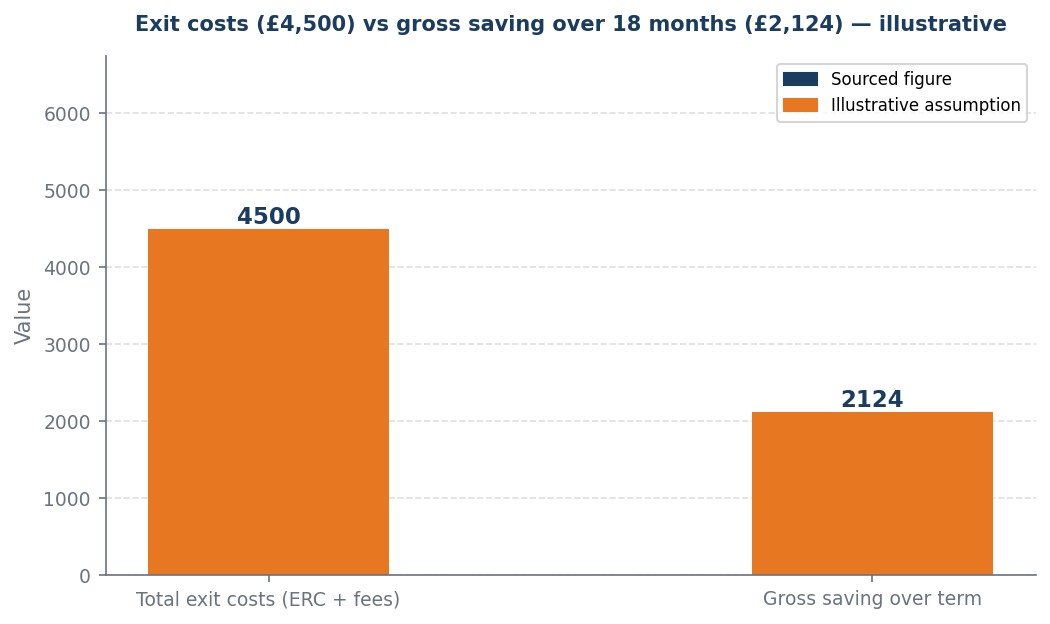
Ditching only makes sense when the gross saving over the remaining term exceeds the ERC and switch costs.
The decision to remain in your 5.5% fixed rate mortgage is justified by the one-time early repayment charge (ERC) of £4,500, which outweighs the £2,124 savings over 18 months from switching to a 4.5% rate. The 1.0 percentage point gap between your current rate and the available lower rate means that while the monthly savings from switching may seem appealing, the upfront cost of the ERC significantly diminishes the financial benefit. Therefore, the immediate cost of switching does not provide a compelling argument against the stability and predictability of your existing mortgage terms. Staying put is the more financially prudent choice.
The rate backdrop
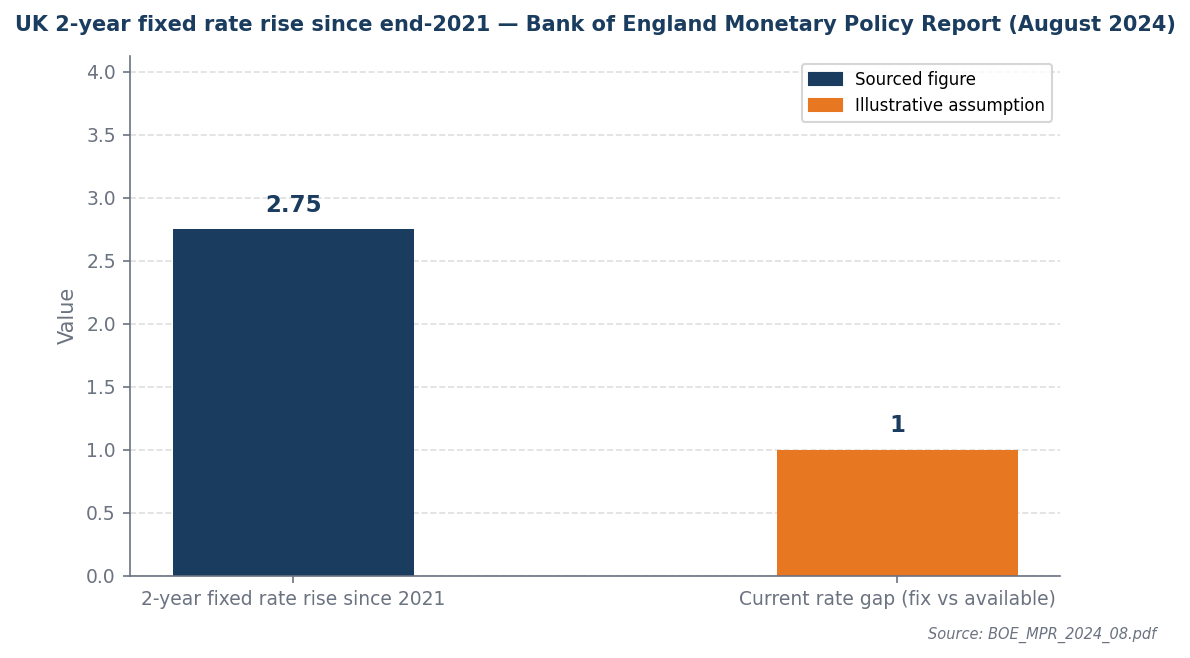
Borrowers who fixed at the 2022-23 peak are paying well above current market rates, so the case for exiting has strengthened.
Since 2021, the Bank of England's rate hikes have significantly impacted the mortgage landscape, with 2-year fixed rates climbing by 2.75 percentage points from historic lows, making it costly for borrowers to switch to new deals. For those still locked into high fixed rates, such as 5.5%, the effective cost of early repayment charges (ERC) and switching—totaling £4,500—far outweighs the potential savings of £2,124 over 18 months from moving to a lower rate. This financial analysis clearly indicates that remaining in the existing 5.5% fixed rate is the more prudent choice, as the costs associated with switching do not justify the short-term savings.
Worked example
Assumptions (illustrative): £200,000 mortgage · 5.5% current fix · 4.5% available rate · 18 months remaining · 2.0% ERC
| Item | Amount |
|---|---|
| Monthly saving | £118/month |
| Gross saving over 18 months | £2,124 |
| Early repayment charge (2.0%) | −£4,000 |
| Switch costs | −£500 |
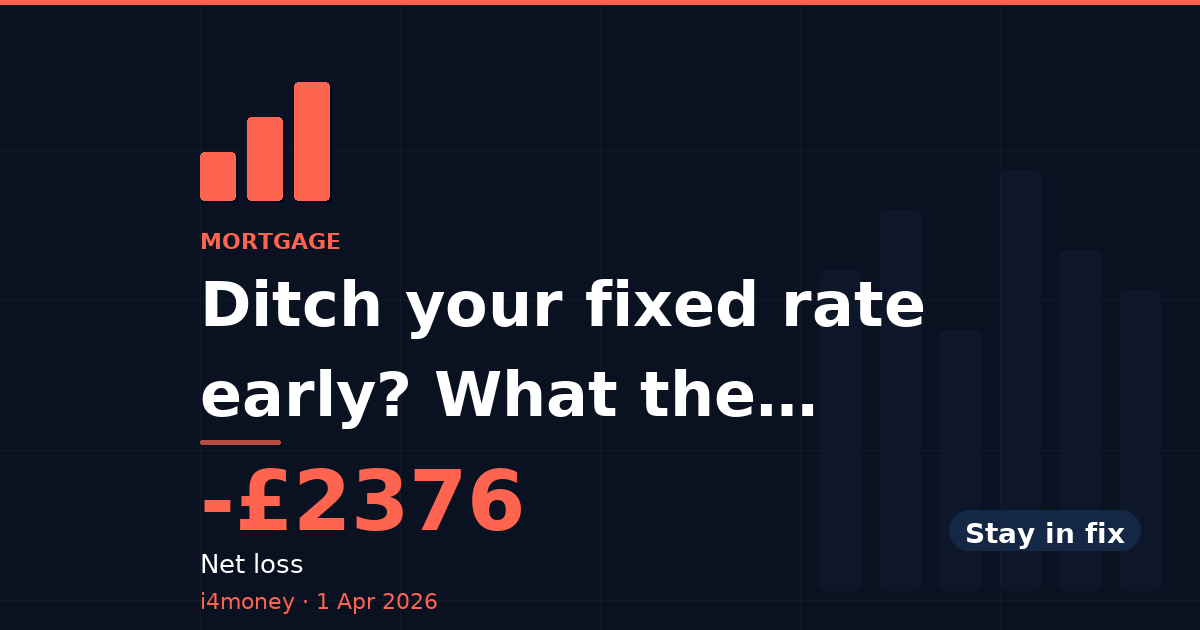
| Net saving | −£2,376 |
Staying in the fix saves £2,376 compared to ditching — the exit costs of £4,500 are not recovered within the 18-month remaining term.
This flips if ERC drops below 0.81% or if the monthly saving increases above £250/month.
When this flips
This flips only when the net saving after ERC and switch costs exceeds the break-even threshold. Below this threshold, the certainty of staying in the fix wins.
What to do next
| Your situation | Action | Why |
|---|---|---|
| Net saving clearly exceeds ERC and switch costs | Ditch the fix | The saving over the remaining term outweighs the exit penalty |
| Net saving is marginal or close to break-even | Stay in the fix | The certainty of your current rate is worth more than a thin saving |
| Rates may fall further before your fix ends | Stay in the fix and review in 3 months | Waiting costs nothing — a better rate available later improves the case |
| You plan to move or remortgage within the fix period | Check ERC portability terms first | A portable mortgage may avoid the ERC entirely |
Sources and provenance
- boe_mpr_2026_02.pdf
- boe_mpc_2026_03.pdf
Data as of: 2026-04-01